🎹 Music + 📖 Fiction + 📣 Marketing

Category: Marketing (Page 1 of 3)

AI Certification Shelf Life

What’s your thoughts on virtual marketing courses and certifications?

I recently completed an “Advanced AI for Digital Marketing” course. And although I learned a lot and am happy to be “certified”, the lifespan of these credentials is humorous. 

AI is like a living organism, constantly mutating. How can anything I learn today still matter six months from now?

Some concepts, yes. But in many of the demos, the interfaces shown were older and outdated. It was a bit of a let down, but how could they possibly have the latest and greatest, right? I wondered if the shelf life of this course was on par with expired vanilla yogurt.

I realized that current blogs or YouTube videos produced days ago about a new tool or concept were the better way to get “certified”, at least for me. My Feedly.com account was where it’s at.

When the course format is a single talking face, hour after hour, the mind shifts. I was learning concepts, but felt more like just enduring. I noticed the speaker’s hair getting scuffled over multiple modules as he aged before my eyes. I wondered how tough it must have been to wear the same outfit multiple days in a row during the video shoots.

As time passed, ideas couldn’t be tested. I needed to maintain the course and couldn’t jump off and try something in a new Chrome tab. It was an educational mismatch. It was an attention span toleration camp.

As I’m already entwined with AI, the slow instructions became friction. Repetition dragged and carefully paced explanations brought out a resistance to them. This system rewards sitting still, opposed to moving forward.

The hypnotic background music and gentle animated graphics were meant to soothe… I guess. But, instead, they dulled. They signaled that nothing urgent was happening here. 

If you’re someone new to AI and taking this course, viewing older versions of LLM platforms in the training will create confusion once you log into the current ones. 

The course taught certainty in a domain that demands constant revision.

Watching someone explain a tool is easy. But using it, breaking it, adapting it, and updating your mental model is where the learning is more likely to happen.

LinkedIn vs. Reddit For Industry Education and Connections

For every 25 posts in my LinkedIn feed, only 5 are posts from Connections. The other 20 are posts are sponsored posts and suggestions. Seems excessive. Anyone else experiencing this? It has led to a quickened, deeper scroll as my eyes filter out the unwelcome items. Sure, some are a nice reveal about a new service, but isn’t the point of LinkedIn more about staying connected with colleagues and learning from each other than getting frazzled by sponsors? It’s free, I get it.

For every 25 posts in my Facebook feed, I see anywhere from 0 to 2 posts from followers. Aside from Groups and a “handover” post from Instagram, I don’t use Facebook much anymore. 

Unfortunately, LinkedIn seems to be following the Facebook model, even with the UI, which seems to have been the inspiration. (I do applaud LinkedIn for adding the Video feed back on the mobile app after having removed it, though.)

The struggle is real for LinkedIn exposure. For my posts, I get about 50 impressions per post. For a 1,700+ followership (not a lot in the LinkedIn world), this is some serious minimal reach. So, why am I being “LinkedOut”? Because my posts suck and don’t resonate with anyone? Possibly. But more importantly, I’m just not playing the game.

The goofy tricks to get the algorithm to favor your post, like tagging a squad of connections and businesses, or commenting thoughtfully often on other posts immediately before you post, seems so disingenuous. The need to “warm up” the algorithm and engage with the posts of your top 10 industry peers list just seems… spammy, ridiculous, deceptive. Just flat out gross and exhausting.

As another source of industry education, but not so much for personal connections, Reddit has 21 subreddits posts per 25 posts in each Community. The experience has much less promoted ads. But most of the ones that I see are often worthwhile, being software or tools that I’d be interested in exploring.

Of course, with Reddit, you exist under the veil of an avatar and display name. Connection are made, but they are not the type that will lead to speaking engagements or conferences meetup lunches. Due to that though, the engagement seems more abundant and honest than LinkedIn. There’s no ulterior motive with the conversations.

For post performance, it’s not even close. I had a marketing tech based post that achieved just a handful of engagement on LinkedIn. With Reddit though, it had over 55k views, 200 upvotes, and 116 comments.

Has anyone else been immersing themselves with Reddit more than LinkedIn to share and gain industry knowledge? I’m a modest user at current, but I’m seeing a lot of structured value with it these days. I love that all interests can be discussed under one hood, from my hobbies (music, writing, and cooking) to multifamily, AI and marketing tech.

Oh My God, You Guys… Come With Me!

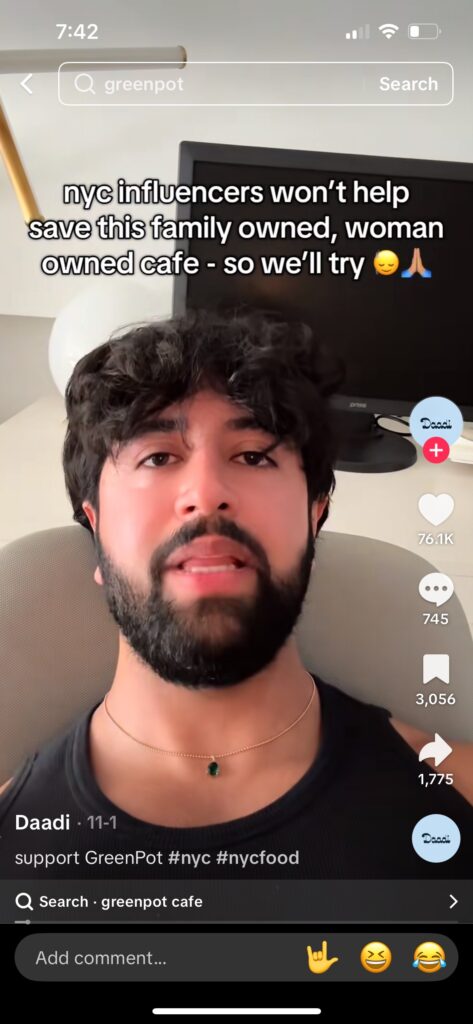
TikTok creator @daadisnacks offers a valuable public service to marketers. He documents and critiques influencer behavior, especially when creators forget that real people and communities exist outside their camera lens.

Some of the scenarios he covers feel unbelievable, yet they say a lot about the state of influencer culture today, and how their prior content needs to be vetted before hiring. Of course, many influencers are beaming with positivity and are reasonable to work with.


Examples @daadisnacks has spotlighted:

Tone deaf moments: While millions in the Philippines were fleeing their homes ahead of a major typhoon, an influencer worried that her vacation beach might not be cleaned up in time.

Bullying for clout: Creators asking restaurants to comp meals for multiple people simply because they’re filming a video.

Boycotting gone wrong: Publicly blasting a restaurant for being asked to leave after occupying a table for five hours.

Buffet chaos: Filming confrontations with staff over taking excessive amounts of lobster from a buffet on a single plate.

Disaster-driven content: Using a category 5 hurricane in Jamaica as a backdrop for content opportunities.

These moments are reminders that when influencers behave poorly, it’s often everyday workers, small businesses and entire communities who feel the impact.

@daadisnacks doesn’t only call out bad behavior. He also spotlights struggling restaurants, visiting them, supporting them and giving them visibility they wouldn’t otherwise get.

His videos demonstrate how influence can be used responsibly and positively. They’re a reminder that reach is not the same as responsibility. And that vetting a creator means looking at more than the follower count and engagement rate.

The Hidden Pitfalls of Hiring Social Media Influencers

Why Brands Must Vet More Than Just Follower Counts

Working with influencers can bring tremendous visibility and excitement to your brand. But it also means you are stepping into their world, their tone, their values, and their entire posting history. When you hire an influencer, you aren’t just hiring a single post. You’re sitting beside everything they have ever said, done, filmed, captioned, or reacted to. Your brand becomes part of their online legacy, for better or worse.

Influencers often live in a bubble of their own curated importance. Sometimes that bubble floats into awkward territory. Sometimes it pops in a very public, very embarrassing way.

Here are the biggest pitfalls to watch out for, along with scenarios that highlight why due diligence is essential.


The Tone Deaf Traveler

Many influencers chase “epic content” without pausing to check the reality on the ground. Picture a pair of travel influencers cheerfully filming airport selfies on their way to a tropical island that is hours away from being hit by a major storm. Their captions celebrate sunshine and “island vibes.” Meanwhile, residents are bracing for impact.

A brand sponsoring that trip suddenly looks like it co-signed the insensitivity. Consumers don’t see nuance. They see your logo sitting beside a post that aged like milk.


The Restaurant Rule Breaker

There will always be influencers who turn everyday inconveniences into dramatic exposés. Imagine someone at a buffet filming themselves loudly challenging staff because they want to take more food than the restaurant allows. Instead of being polite, they frame it as a “scandal” for content. The worker becomes an unwilling character in a viral confrontation video.

A brand that partners with this person risks being associated with entitlement, bullying, or unnecessary conflict. Not a great look when what you wanted was a happy review of your product.


The “Customer Service Crusader”

Some influencers love turning minor customer service moments into multi-part sagas. A delayed latte, a misprinted receipt, or a minor misunderstanding suddenly becomes a ten-video series about “standing up for what’s right.” The influencer ramps up the drama because drama gets views.

If your brand hires them without vetting, you might discover later that their online persona thrives on negativity. Suddenly you’re linked to someone known for putting minimum-wage workers on blast.


The Misleading Expert

There’s a breed of influencer who presents strong personal opinions as undisputed fact. One day they’re a nutrition expert. The next they’re a financial advisor. The day after that they’re an amateur psychologist diagnosing strangers.

Your brand could accidentally be partnering with someone who dispenses bad advice or makes claims that aren’t accurate or safe. The risk isn’t just embarrassment. It could become a trust issue for your customers.


The Manufactured Drama Influencer

Some creators thrive on stirring up conflict. They pick fights with other influencers, exaggerate insults, or stage breakups for attention. The engagement is high, but so is the chaos.

Brands that step into that ecosystem often find their sponsored content sandwiched between rants, rumors, and heated comment wars. Not ideal for your carefully crafted messaging.


The “Shock Value” Prankster

Prank influencers often push boundaries for views. Some “pranks” cross into unethical territory, involving unsuspecting people in uncomfortable or frightening situations. Even if the influencer apologizes later, the internet rarely forgets.

A brand sponsoring them looks like it endorses the behavior, even if that was never the intention.


The Problem With Viral Apologies

A final caution. Many influencers who cause problems eventually release tearful apology videos. These can go one of two ways. Either they are sincerely remorseful or they are performing regret to maintain their follower count. Brands get dragged into that spotlight whether they want to or not.

Once your logo is linked to an influencer’s meltdown, you are part of the narrative.


The Takeaway

Influencers aren’t just content creators. They are public figures whose posts, reactions, and judgments instantly reach thousands or millions of people. Brands should remember that partnering with an influencer is like agreeing to stand beside them on stage while the spotlight moves around unpredictably.

Not all influencers are problematic. Many are thoughtful, creative, and professional. But the ones who aren’t can cause real damage to your reputation.

The safest approach is to vet carefully. Look at their history. Look at how they treat people. Look at how they behave when they think the camera gives them power.

Great influence can build your brand. The wrong influence can bury it.
Careerism

Digital Summit Philly

You need to be a careerist.

Not in a negative way, but in a survivalist way.

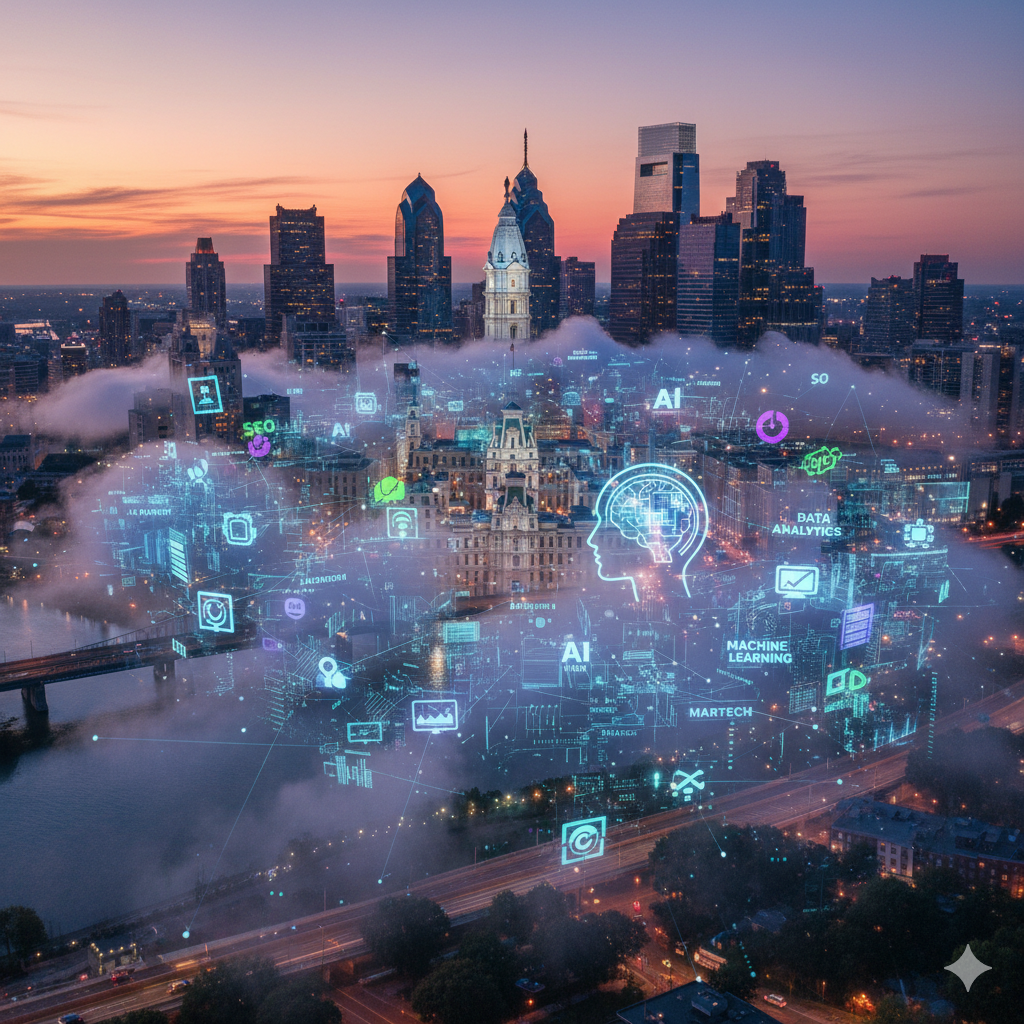
That was the unspoken theme at the recent Digital Summit Series Philly conference.

Traditionally, a careerist is defined as “someone who thinks their career is more important than anything else, and who will do anything to be successful in it.”

That used to sound selfish. Now, it sounds like someone simply trying to stay relevant, and to keep up with the constant evolution of MarTech, AI and platforms.

The importance of maintaining your career edge today comes from the sheer volume of technology we’re expected to understand and use. It’s not just learning, it’s endurance.

The conference offered great takeaways, inspiring stories, and plenty of memorable Instagrammable quotes. But underneath it all, there was a noticeable pressure, a fog of “how do we keep up?”

It’s not entirely new. When I started as a web designer, I spent hours at the University of Barnes & Noble, studying CSS3, HTML5, and Flash ActionScript 2.0.

The tools have changed, but the grind to stay current has intensified.

If you work 50 hours a week, how much time is left to truly research and test new AI tools and marketing technologies? Even a focused hour on a Friday afternoon feels like a drop in the ocean.

And so, you spend less time with family, friends, hobbies. Your identity morphs.

So, what’s the most effective way to nurture your growth? Following thought leaders who share their experiments and results seems the obvious best option.

But it also raises a question: are marketing degrees or certifications keeping pace? I’m in the middle of one right now, and much of what I’m learning I’ve already read casually in blogs.

Being a “careerist” today isn’t about ambition at all. It’s about survival: staying curious, adaptable, and resilient enough to keep learning, no matter how fast the landscape forms mountains.

Email Management and Its Impact on Projects

The Overlooked Skill

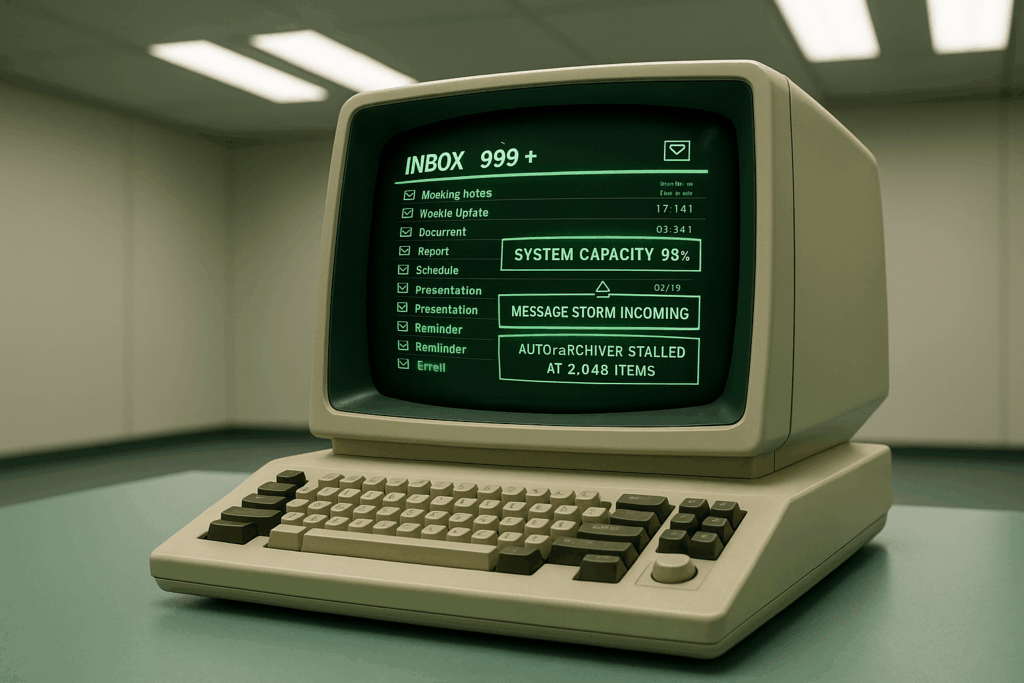
In every company I’ve worked with, I’ve noticed a surprising gap. There is never a policy or training on how to effectively use email. Outlook or Gmail accounts are issued, and it’s simply assumed that employees will figure it out… and rightly so. Before long, email becomes the default communication method and, without guidelines, the foundation of most people’s workdays. (I’ve seen more instructions on bathroom etiquette than with email.)

Email management

Despite its importance, email is often treated as a dull, administrative tool. Yet the way we manage it directly shapes how productive and successful we are.

The Distraction Cycle

I often schedule my day carefully, only to be derailed by the familiar chime or pop-up of an incoming message. Those small interruptions add up. Even a quick glance at the bottom-right preview can pull focus away from deep work. That 10 minute analysis than takes 30 minutes.

Here are three approaches I’ve experimented with to tame distractions:

  • Turning off both sound and visual alerts entirely. (You might as well not exist.)
  • Working 20 solid minutes before checking the inbox again. (Probably the best method.)
  • Restricting email checks to set times, like 9 a.m. and 4 p.m. (Confuses people with sudden response barrages.)

Truth is, there are endless strategies. The key is to adopt one that aligns with your work style and protects your ability to focus.

The Blur of Projects

A moment that stood out for me was when someone asked what I was working on that day. I couldn’t give a clear answer. I had touched so many projects in such quick succession that they blurred together. The only way I could retrace my steps was by reviewing my sent messages. It’s like they were receipts, a diary of two-minute frantic activities.

Email encourages micro-moments of task switching. Add in Slack, Teams, or project management platforms, and the distractions only multiply. Even technical issues like messages disappearing into Junk or filtering systems create more noise to manage.

Building Time Buffers

To cope, I’ve started padding my calendar. If a project will take 30 minutes, I block 45 to allow for the inevitable email interruptions. I also dedicate two hours daily to focused email response, delegation, and scheduling.

When managing responses, I try to remember that not every email is urgent. If six out of seven people have replied to a scheduling question, the last one can wait. Time is better spent keeping priorities clear than reacting immediately to every ping.

Practical Tactics

Most professionals develop small tricks to tame the intimate and personalized inbox:

  • Flagging emails with categories or colors.
  • Filing messages away for later response.
  • Scanning for only the most pressing items.
  • Scribbling frantically on Post-it notes and decorating their LCD screens.

Recently I discovered a helpful Outlook feature: the “adjacent email” trick. Instead of marking a message as read when you simply select it, which is the default, you can choose to open it without losing the bold unread marker. It’s a small improvement, but one that makes inbox management less chaotic.

Leveraging AI Tools in Outlook

AI is being integrated into email platforms like Outlook to reduce the burden and improve productivity. Some helpful tools include:

  • Microsoft Copilot for Outlook: Drafts replies, summarizes long email threads, and suggests next steps directly in your inbox.
  • MyAnalytics / Viva Insights: Provides data on your email habits and suggests focus time, response patterns, and ways to reduce overload.
  • Cortana Scheduler: Assists in scheduling meetings automatically, cutting down on back-and-forth.
  • Third-Party Add-Ins such as Boomerang or Grammarly: Help with scheduling sends, setting reminders, and writing polished, clear messages.

Will the future of email management will be less about human willpower and more about using intelligent tools to filter, prioritize, and automate? By blending intentional habits with AI assistance, we can reclaim email as a tool for productivity rather than a source of distraction.

Absolute Need For Social Media Marketing For Apartment Communities

This blog post from Digible, written by Maddie Taylor, makes the case for why apartment communities require social media for effective marketing. The argument is clear: social is no longer optional. (Hasn’t been for years.) It’s essential for building reputation, visibility, and driving leases:

  • Lifestyle-driven visuals help prospects imagine what it would be like to live there.
  • Even before a community opens, establishing a social presence creates early awareness and differentiation in a crowded market.
  • Residents become powerful advocates with their tagged user-generated posts, adding authenticity that no polished brochure can match.

Where the buy-in gets complicated is attribution. A highly engaging post might generate 100,000 views, 100s of likes, comments, and shares, yet show zero tracked leads in a CRM. Even with UTM tracking “link in bio” and call tracking phone numbers, social lurkers rarely immediately convert to leads.

With prospects ogling up to 15 sources before scheduling a tour, the website will typically always appear to be the sole dominate source. Prospects may save a post or research a community later, as they prefer to stay in-app within the social platform and continue scrolling.

Social channels encourage in-app behavior. Clicks out to a website are limited compared to the attention spent on content inside the feed. Often, browsers don’t pass the referral source to Google Analytics, and GA then tosses the user visit into “Direct”. Have you noticed Direct traffic numbers continuing to be larger? The “dark social” aspect also has links shared via DMs, email and Messaging tools sending the user visit to Direct.

What social truly excels at is building familiarity and aspiration. Those are the emotional drivers that turn an impression into interest, and interest into a signed lease. It also transcends at humanizing the brand and providing humor and infotainment via trends.

Most analytics platforms are built around last-click attribution, which heavily favors channels like paid search or direct visits. Social tends to be a discovery and inspiration channel. People scroll, they see something intriguing, they remember it, and when the time comes, they search or go directly to the website. The credit gets assigned elsewhere, even though the first impression happened on social.

Social is often the start of the journey, but it rarely gets the credit as the closer. Vanity metrics aren’t the end goal, but they’re not meaningless either. They’re the visible evidence of attention and awareness. The real problem is measurement, not impact.

When Shares Outrun Likes: The Anatomy of a One-Minute Viral Reel

There’s a weird thing that happens sometimes when you post on social media: you throw something up for fun with no big production, no months-long content calendar, and it works better than anything you’ve carefully planned.

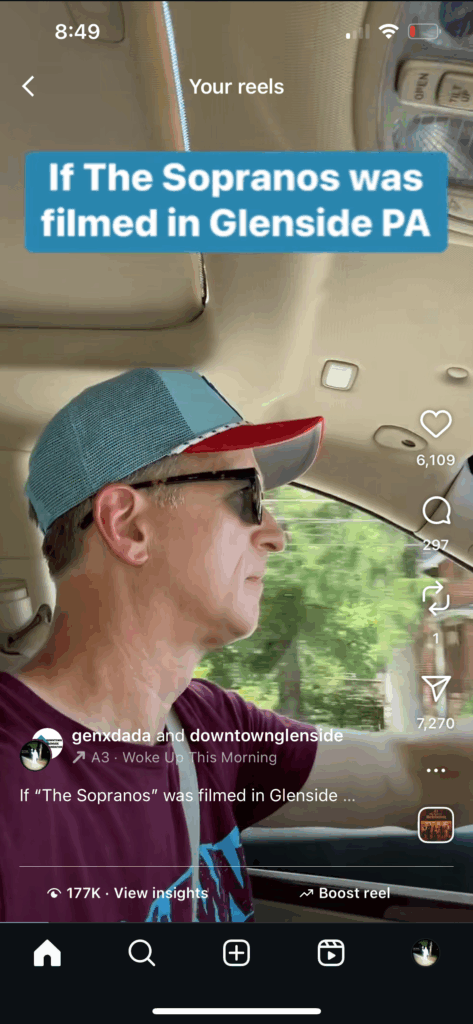
That’s what happened with my Sopranos-style Instagram Reel. Instead of Tony driving through New Jersey, it was me driving around Glenside, Pennsylvania, hitting the landmarks that matter to me: the shops, the restaurants, the old bridges with murals, even a donut from Daryl’s Pastries. The whole thing had similar grit, improper lighting, and jerky camera work as the original intro. But, opposed to driving a top tier modern SUV, I was driving a 2007 clunker. And instead of coming home to a McMansion for the finale, I end up at jaded at GIANT (once again) to buy mundane staples.

I figured the Reel might get 20 likes.

Instead, it arrived at:

  • 178k+ views
  • 6,155 likes
  • 7,309 shares
  • 300 comments

Throughout, it kept a steady rate of producing 115 to 125% more shares than likes. In the social media world, that’s like a solar eclipse. It’s rare. In most posts, shares are a fraction of likes. In fact, it’s so unusual that marketers tend to study it the way birdwatchers get excited over a rare warbler sighting.


So why did it take off? A few working theories.

1. A recognizable format with a twist

The Sopranos intro is instantly familiar. You don’t need to explain it. You just recreate it and people get it in the first two seconds. Add a local twist, and suddenly you’re talking to two audiences at once: fans of the show and people with a connection to Glenside.

2. Local details that hit the nostalgia button

This wasn’t just a list of businesses. It had telephone poles with decades of character, cracked concrete bridges painted over with murals, and storefronts that haven’t changed in years. That’s the stuff that sends former residents, even the ones who live in Florida now, into the comments to say it made them homesick.

3. Cross-generational appeal

Here’s the thing: The Sopranos is old enough now that it has two lives. Older viewers remember watching it when it aired. Younger viewers are discovering it on streaming and treating it like retro-cool. That’s possibly why this Reel connected with people in their 20s… and people in their 80s.

4. Perfect timing without trying

I posted it on Saturday morning, July 5th, the day after the Fourth of July. Almost everyone was off work. People were scrolling, possibly hungover and still smelling like fireworks. And I happened to be wearing a Phillies hat with the American flag inside the “P.” Was that planned? No. Did it make it feel seasonally relevant? Absolutely.

5. The “you forgot my spot” phenomenon

Some people pointed out I didn’t include their favorite local attraction. In a 60-second video, you can’t get to everything. But that reaction is actually a win. It means people care enough to want their spot in the spotlight. It also means Part 2 is practically writing itself.


Why more shares than likes matters

Shares are the ultimate “you have to see this” metric. A like is a polite nod; a share is someone walking across the room and saying, “Stop what you’re doing, watch this.” When shares outpace likes, it’s a strong signal you’ve hit something culturally resonant.

For this Reel, shares beat likes by 20%. I rarely see that, and I work in digital marketing for a living. When it does happen, it’s usually because the content triggers identity (“this is so us”), inside jokes, or hometown pride. This one seemed to have all three.


The marketing takeaways

  1. Leverage formats people already know. If they recognize it instantly, they’ll stick around.
  2. Get hyper-specific with details. The texture of a telephone pole can mean more than a skyline shot.
  3. Post in low-noise windows. Holiday weekends, early mornings — times when people have time to scroll.
  4. Don’t fear omissions. The comments section can become your idea bank for sequels.
  5. Measure shares as a top metric. They tell you how far your content travels beyond your own audience.

The next Reel in this series is already underway. I’ll probably get a mix of nostalgia, mild outrage, and “you forgot my place” comments again. But I don’t think it will produce even an eighth of this engagement. But if I can get people to argue about which coffee shop belongs in a Sopranos parody, we’ll see.

Update: One last thing to point out is that platform culture and audience context matter just as much as content. This same Instagram video was posted just minutes apart from TikTok where it hardly performed at all, earning just 30 likes, 1 comment, and 581 views.

The same content that goes viral on one platform can clearly fizzle on another, not because it’s bad, but because the platform’s culture, algorithm, and audience context are completely different. TikTok didn’t have the hyper-local seed audience to get my Sopranos parody going, and the algorithm didn’t know who to show it to. On Instagram, my core community made it fly.

Instagram Highlights Are Failing Marketers — Here’s Why

Hot Take: Instagram Highlights are kind of… useless. At least in their current form. Let me explain 👇

Instagram Highlights still play from oldest Story to newest.

Imagine you’re a prospect clicking on an apartment community’s “Events” highlight. What’s the first thing you see?
➡️ Ribbon-cutting ceremonies
➡️ Empty amenity spaces under construction
➡️ People in hard hats
➡️ Signage unveilings

Meanwhile, the actual selling-point events (such as pool parties, pet parades, and yoga brunches) are buried at the end. This assumes that anyone even makes it that far.

Why does Instagram still force us to scroll through digital cobwebs to find relevant content in Highlights?

The latest stories should play first, especially in industries where timeliness matters. In apartment leasing, for example, prospects may want to revisit a Story they saw 26 hours ago with a temporary link or event details. They’re not here for a nostalgia tour.

Is there any industry where it makes sense to show the oldest Highlights first?

Google AI Mode Turns Questions Into Conversations

You may never need to jump to a Google search result source again. With the current AI Assistant in place, most of your questions get answered and then some. Now with AI Mode, you can engage in follow-up questions and get everything you need answered all in one location within Google Search. I haven’t seen any ads / sponsorship sections of the AI Mode yet. For now, it’s a super clean experience without any clutter from various Google tools (like Maps, Reviews, Display Ads etc.) peppered into the experience.

@genxdada

Google AI Mode is now available on the Chrome browser. Different than the AI Assistant, this allow for a conversation similar to ChatGPT. #ai #google

♬ original sound – Carl Franke
« Older posts

© 2026 Carl Franke

Theme by Anders NorenUp ↑